





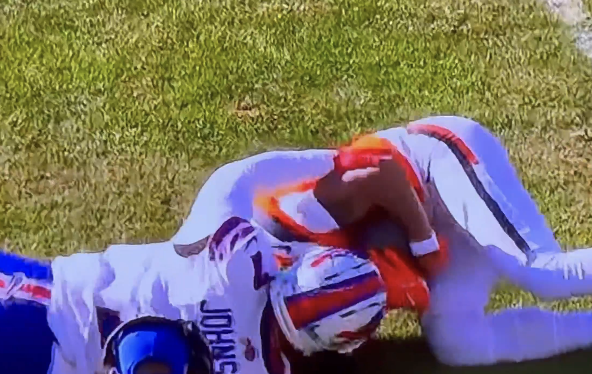
Understanding how the NFL defines possession and when a player is ruled down is critical to interpreting some of the league’s most controversial calls. From overturned catches to debates over whether a runner was down by contact, these rules often decide games.
This guide breaks down the official NFL rules on possession and knee contact in clear, plain language.
What Is Considered Possession in the NFL?
For a player to be ruled in possession of the football, all three of the following elements must be met:
1. Control of the Ball
The player must secure the ball firmly with their hands or arms. If the ball is moving, shifting, or being bobbled, possession has not been established.
2. Inbounds Requirement
The player must:
- Get two feet down in bounds, or
- Get any other body part (such as a knee or elbow) down in bounds
Hands do not count as body parts for this rule.
3. A Football Move
After control and feet/body placement, the player must make a recognizable football action, such as:
- Turning upfield
- Tucking the ball away
- Taking an additional step
- Reaching or bracing for contact
Without a football move, possession may not be complete.
Does a Knee Touching the Ground Mean the Player Is Down?
Not always. A knee touching the ground only ends the play under specific conditions.
Down by Contact
A player is ruled down when:
- Any body part other than hands or feet touches the ground
- The player has possession
- The player is touched by an opponent
If all three are met, the play is immediately dead.
Knee Touching the Ground Without Contact
If a player’s knee touches the ground without contact from a defender, the play continues. This commonly occurs when:
- A runner slips
- A receiver stumbles after a catch
- A ball carrier regains balance after falling
As long as there is no defender contact, the player may get up and continue advancing the ball.
The “Going to the Ground” Rule
One of the most misunderstood rules involves players who are falling while securing possession.
If a player is going to the ground during the catch process:
- They must maintain control of the ball all the way through contact with the ground
- If the ball shifts, moves, or comes loose when the knee, hip, or elbow hits the ground, the pass is ruled incomplete
This rule is frequently applied during replay reviews.
Voluntarily Taking a Knee
When a player intentionally takes a knee, such as:
- A quarterback kneel-down
- A runner clearly giving themselves up
The play is ruled dead the instant the knee touches the ground, regardless of contact.
Common Situations That Cause Confusion
Knee Down While Securing the Catch
- Knee touches before possession → Incomplete pass
- Possession established before knee touches → Player is down at that spot
Knee + Defender Touch
Any knee contact combined with defensive touch immediately ends the play.
Knee Without Control
A knee touching while the ball is still moving does not create possession.
One-Rule Summary
A knee touching the ground only ends an NFL play if the player already has possession and is contacted by a defender—or if the player gives themselves up.
Why This Rule Matters
These interpretations impact:
- Catch vs. incomplete rulings
- Turnovers and fumbles
- Replay overturns
- Game-winning plays
Knowing the difference between possession, contact, and voluntary down situations helps fans understand why officials make — or reverse — critical calls.