





Curling is one of the most strategic and misunderstood winter sports, especially for new viewers tuning in during the Olympics or world championships. If you’ve ever wondered how curling scoring works, you’re not alone. While the gameplay looks slow and deliberate, the scoring system is simple once you understand a few key concepts.
This guide breaks down curling scoring step by step, using clear examples so you can follow along confidently.
What Is an End in Curling?
A curling game is divided into “ends,” which function similarly to innings in baseball.
- Most competitive games are 8 or 10 ends
- Each team throws 8 stones per end
- Teams alternate shots until all stones are played
Scoring happens only after all 16 stones in an end have been delivered.
Understanding the House and the Button
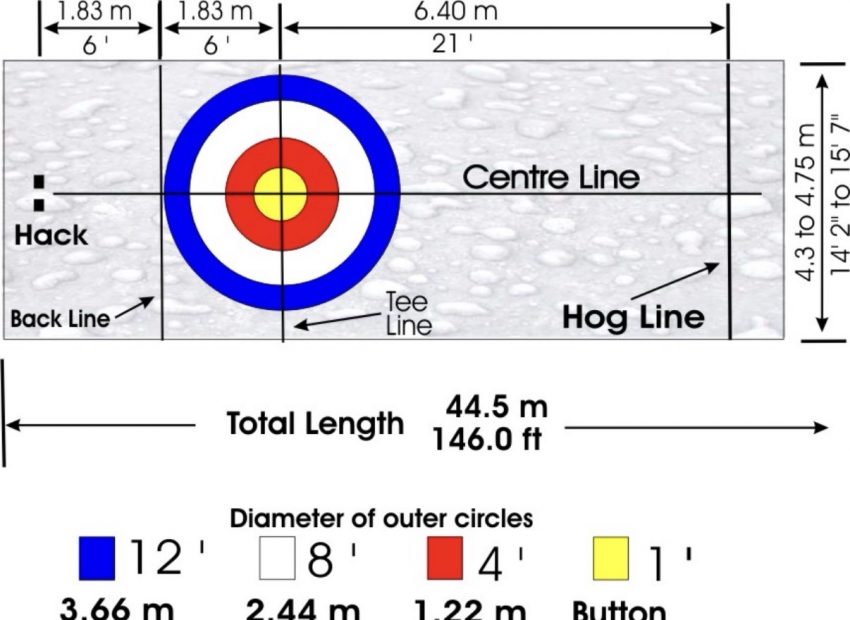
Scoring in curling revolves around the house, the circular target at the end of the ice.
- The house consists of concentric rings
- The button is the small circle at the exact center
- Only stones touching the house are eligible to score
Stones outside the rings do not count, no matter how close they appear.
How Points Are Scored in Curling
At the conclusion of each end:
- Only one team can score
- Points are awarded based on distance to the button
The scoring rule
A team scores one point for each of its stones that is closer to the button than the opponent’s closest stone.
Example
- Team A has the two closest stones to the button
- Team B’s nearest stone is third closest
Result: Team A scores 2 points for that end.
Key Curling Scoring Rules to Know
- Stones must be inside or touching the house
- Stones can be moved, removed, or blocked during play
- The number of points in an end can range from 0 to 8
- If both teams’ closest stones are equal distance, the end is blanked (no points)
What Is the Hammer in Curling?
The hammer refers to the advantage of throwing last in an end.
- The team with the hammer throws the final stone
- This is a major strategic advantage
- Teams often aim to:
- Score multiple points with the hammer
- Force the opponent to score only one point without it
After an end:
- The team that scores loses the hammer
- The team that does not score gains the hammer
What Is a Blank End?
A blank end occurs when:
- No stones remain in the house after all shots
- Or the teams’ closest stones are tied
When an end is blanked:
- No points are scored
- The team with the hammer keeps it for the next end
Blank ends are often used strategically to set up bigger scoring opportunities later.
How Do You Win a Curling Match?
- Points are accumulated across all ends
- The team with the highest total score wins
- If the score is tied after the final end, the game goes to an extra end
- The hammer in the extra end often plays a decisive role
Why Curling Scoring Is So Strategic
Curling scoring is less about constant scoring and more about control. Teams frequently sacrifice points early to gain the hammer later, manage stone placement, and limit their opponent’s scoring opportunities.
This balance of precision, planning, and patience is why curling is often called “chess on ice.”
Final Thoughts
Now that you understand how curling scoring works, the game becomes much easier—and more exciting—to watch. By focusing on the house, the button, and which team holds the hammer, you’ll be able to follow every end like a seasoned fan.
Whether you’re watching Olympic curling or catching a local club match, scoring is the key to understanding the strategy behind every stone.