





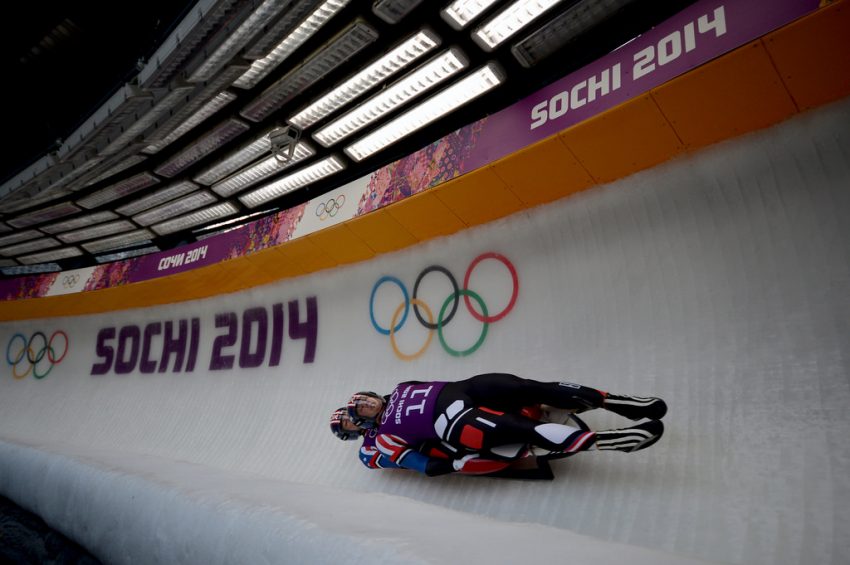
Luge is one of the fastest and most technical sports in the Winter Olympics. Athletes race down an icy track at speeds exceeding 85–90 mph while lying flat on their backs. One of the most common questions fans ask is: How do you steer in luge?
Unlike a car or even a bobsled, there is no steering wheel. Luge athletes rely on precise body control, subtle pressure, and years of training to guide their sled down the track.
Here’s everything you need to know about how steering works in luge.
How Luge Steering Works
Luge steering is based on body movement and pressure control, not mechanical turning systems. The sled responds to extremely small adjustments in weight and force.
1. Leg and Calf Pressure (Primary Steering Method)
The sled has two steel runners underneath. Athletes use their calves and feet to apply pressure to one runner or the other.
- Press right runner → sled steers right
- Press left runner → sled steers left
Even a small amount of pressure can change direction dramatically at high speed. Overcorrecting can cause skidding or loss of control.
2. Shoulder and Hip Shifts
Luge athletes subtly shift their shoulders and hips to help guide the sled through curves.
These movements are extremely small — often just millimeters. At 90 mph, even the slightest lean changes the sled’s line through a turn.
Maintaining balance while making micro-adjustments is one of the most difficult parts of the sport.
3. Head Position and Fine Adjustments
Athletes also use their head position to fine-tune steering.
Because the body is fully extended and rigid, turning the head slightly can shift weight just enough to adjust the sled’s trajectory.
It may look effortless on TV, but it requires years of muscle memory and core strength.
Is There a Steering Mechanism in a Luge Sled?
There is no steering wheel or brake system in luge.
- The sled consists of a lightweight frame and two runners.
- Steering comes entirely from body pressure.
- There are no brakes — the track’s uphill finish slows the sled naturally.
This makes luge one of the purest forms of gravity racing in the Winter Olympics.
Why Steering in Luge Is So Difficult
Several factors make luge steering incredibly challenging:
- Speeds can exceed 90 mph
- Tracks include tight, high-banked curves
- Ice conditions vary
- Tiny mistakes can cause crashes
Unlike bobsled, where a pilot steers with ropes, or skeleton, where athletes steer face-first, luge competitors rely almost entirely on lower-body control and precision.
How Luge Athletes Train to Steer
Luge athletes spend years developing:
- Core strength
- Lower-body control
- Reaction timing
- Track memorization
Before competition, athletes walk the track and study every curve to know exactly when and how much pressure to apply.
Steering in luge is as much mental as it is physical.
Final Thoughts: The Art of Steering in Luge
So how do you steer in luge?
Through calf pressure, subtle body shifts, and precise weight distribution — all while traveling close to highway speeds on ice.
It’s a sport built on millimeter-level adjustments and total body control. That combination of speed and precision is what makes luge one of the most thrilling events in the Winter Olympics.