





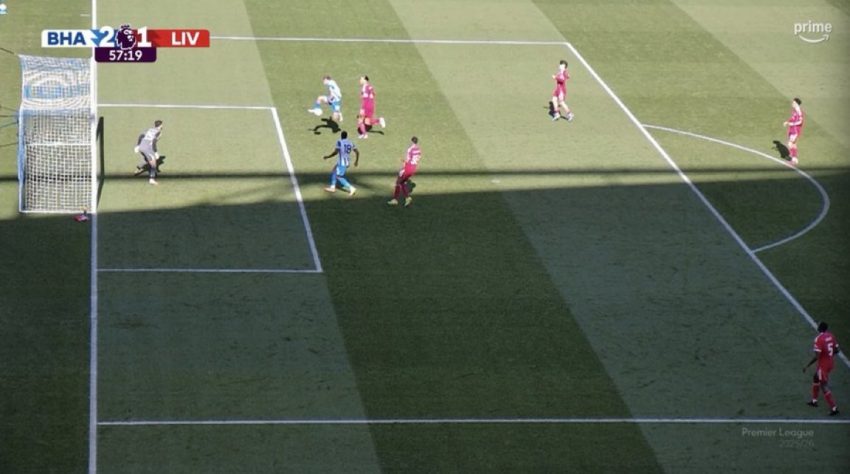
If you’ve ever watched a tap-in goal from a square pass or a cutback inside the box and thought, “That has to be offside,” you’re not alone. These situations create some of the most misunderstood moments in football, especially in high-speed matches like the Premier League.
The truth is, these goals are often perfectly legal. Here’s a clear breakdown of why square passes and cutbacks are almost always onside.
Understanding the Offside Rule (Made Simple)
According to the official Laws of the Game from The IFAB, a player is onside if, at the moment the ball is played, they are:
- Level with or behind the second-last defender
- Or level with or behind the ball
That second condition—being behind the ball—is the key to understanding both square passes and cutbacks.
What Is a Square Pass in Soccer?
A square pass happens when a player passes the ball sideways across the face of goal, usually from a position close to the goal line.
Why It Looks Offside
- The attacker scoring is often closer to goal than defenders
- There may be no defenders between them and the net
Why It’s Actually Onside
- The ball is passed from ahead of the attacker
- The scorer is behind the ball at the moment of the pass
Being behind the ball automatically keeps the attacker onside, even if they are beyond every defender.
Real-Game Example
This is the classic tap-in goal seen regularly in top competitions.
What Is a Cutback in Soccer?
A cutback occurs when a player reaches the byline or edge of the box and passes the ball backward to a teammate arriving in space.
Why It Looks Confusing
- The penalty area is crowded
- Attackers and defenders are moving in different directions
- Positioning appears chaotic
Why It’s Onside
- The ball is played backward
- The receiving player is clearly behind the ball
Because of this, offside is effectively ruled out when the pass is made backward.
Key Difference: Defender vs Ball Position
The easiest way to understand it:
- Standard offside checks compare the attacker to the defender
- Square passes and cutbacks compare the attacker to the ball
If the attacker is behind the ball, they cannot be offside regardless of defender positioning.
Why VAR Confirms These Goals
Modern systems like VAR use precise calibration to determine positioning. In tight calls:
- Level with the defender means onside
- Behind the ball means onside
This is why many goals that look offside in real time are correctly allowed after review.
Final Takeaway
Square passes and cutbacks are not loopholes. They are direct applications of the offside law.
- Square pass across goal: onside because the attacker is behind the ball
- Cutback inside the box: onside because the pass travels backward
- Defender positioning becomes secondary in these cases
Once you understand this, these types of goals become much easier to read and interpret.