





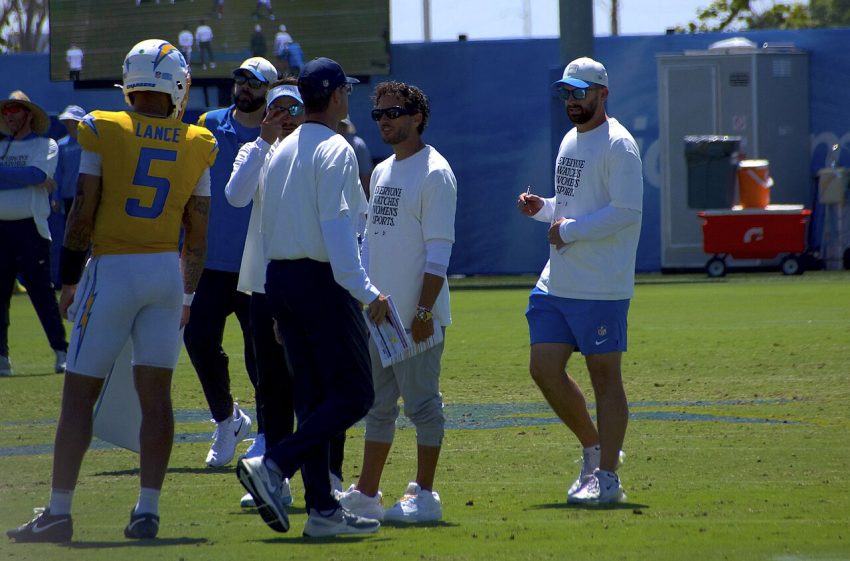
Los Angeles Chargers head coach Jim Harbaugh delivered some of his most candid comments of the season following a 22-6 loss to the Kansas City Chiefs on Sunday, dropping his team to 0-6 for the first time since 2000. Amplified by ESPN’s Adam Schefter, Harbaugh acknowledged major issues across the board but zeroed in on the offense.
“We have to address everything guys and especially offensively. We’re not scoring enough points,” Harbaugh said. When asked directly whether offensive coordinator Mike McDaniel would continue calling plays, he replied: “We’re going to look at everything. The job I’m doing, it starts with me. The plan is we’ll watch this and get with our offensive coaches. … [Offense] Needs to be addressed.”
These remarks mark a noticeable shift in tone. Earlier in the season, after the team fell to 0-4, Harbaugh had firmly defended McDaniel, stating his job was “not in jeopardy” and that the staff would “keep growing.” Now, heading into the bye week at 0-6, the head coach is openly leaving the door open to changes.
Chargers’ Alarming 0-6 Start and Offensive Collapse
The Chargers entered 2026 with elevated expectations. After consecutive 11-win seasons and playoff appearances under Harbaugh, the organization hired former Miami Dolphins head coach Mike McDaniel as offensive coordinator in an attempt to better unlock quarterback Justin Herbert’s talent. The results have been the opposite of what was hoped.
Through six games, the Chargers have scored just 90 points (averaging roughly 15 points per game) and rank near the bottom of the league in most offensive categories. Against the Chiefs, they managed only 259 total yards and failed to score a touchdown. Herbert finished 22-of-37 for 204 yards with one interception and was sacked multiple times. Over the full season, he has struggled with completion percentage, turnovers, and overall efficiency—numbers that represent a sharp decline from his established standards.
Compounding the schematic and execution issues have been injuries along the offensive line and in the receiving corps, including to key pieces such as Ladd McConkey. Penalties, turnovers, and inconsistent execution have repeatedly stalled drives.
The Mike McDaniel Experiment Under Scrutiny
McDaniel’s arrival was widely viewed as a potential high-upside move. His time in Miami featured creative play design, heavy use of motion, and a quick-passing attack. However, the marriage with Herbert has not clicked. The Chargers’ offense has ranked among the league’s worst in expected points added (EPA), success rate, and scoring efficiency. Herbert has not thrived in the timing-based concepts, and the unit has frequently been its own worst enemy with procedural penalties and failed executions in short-yardage situations.
McDaniel has previously accepted responsibility, noting that as the play-caller he shoulders significant blame when results fall short. Yet after six losses and a particularly quiet offensive outing in Kansas City, questions about continuity have intensified. Analysts and former players have publicly suggested that retaining McDaniel could put further pressure on Harbaugh himself.
What Harbaugh’s Comments Mean Heading Into the Bye
Harbaugh’s willingness to say the team will “look at everything” — and that the process “starts with me” — indicates internal evaluation is underway during the bye week. This could range from schematic simplifications and personnel adjustments to more significant changes in play-calling duties. While Harbaugh stopped short of announcing any immediate firings or demotions, the language is more open-ended than his previous public support for the current structure.
The Chargers’ next game is not until November 1 against the Los Angeles Rams. That extended break gives the coaching staff time to review film, address execution issues, and decide on any adjustments. With a franchise quarterback in Herbert and remaining talent on the roster, the organization still has a path to improvement, but the 0-6 hole and nine-game losing streak dating to last season have raised the urgency.
Looking Ahead for the Chargers
The Chargers’ 2026 season has quickly turned into a referendum on the offensive vision implemented in the offseason. Harbaugh’s post-Chiefs comments, shared widely through Schefter and other reporters, make clear that maintaining the status quo is no longer the automatic plan. Whether that leads to concrete changes in play-calling, scheme, or staff remains to be seen, but the message is unambiguous: the offense is not performing at an acceptable level, and solutions are being sought.
For a team that entered the year as a potential contender in the AFC West, the early results have been a sharp disappointment. How the Chargers respond after the bye will go a long way toward determining whether the season can still be salvaged or whether larger organizational questions will dominate the rest of 2026.