




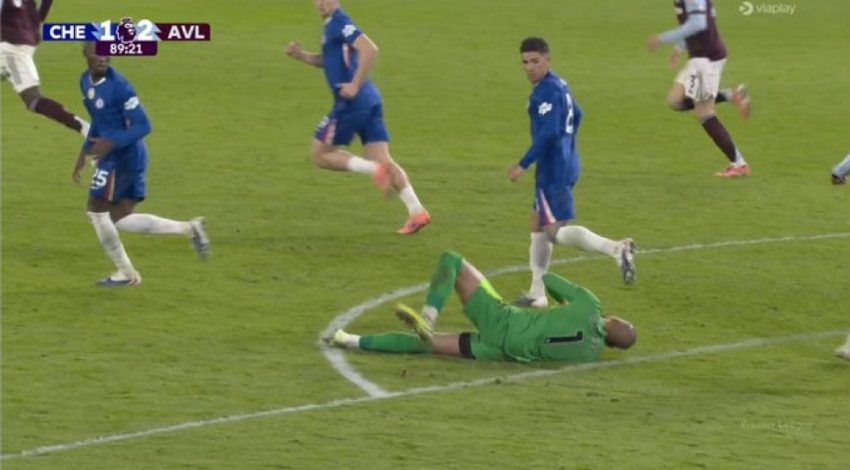
In soccer, goalkeepers have special privileges—but only inside their own penalty area. One of the most common and costly mistakes a goalkeeper can make is handling the ball outside the box. Below is a clear, SEO-friendly breakdown of what happens, the punishment, and how referees interpret the rule.
Can a Goalkeeper Use Their Hands Outside the Penalty Area?
No.
A goalkeeper may not touch the ball with their hands or arms outside the penalty area. Once the ball (or the goalkeeper) crosses the line, the keeper is treated like any other outfield player.
This rule is defined by the International Football Association Board (IFAB), which governs the official Laws of the Game worldwide.
What Is the Punishment?
If a goalkeeper handles the ball outside the penalty box, the referee will award:
- An indirect free kick to the opposing team
- The free kick is taken from the exact spot where the handling occurred
No penalty kick is given, because penalties only apply to fouls committed inside the penalty area.
Can the Goalkeeper Receive a Yellow or Red Card?
Yes, depending on the situation.
Yellow Card
A caution may be issued if:
- The goalkeeper stops a promising attack
- The offense is repeated
- The action is considered unsporting behavior
Red Card (DOGSO)
A goalkeeper can be sent off if the handball:
- Denies an obvious goal-scoring opportunity
- Prevents a clear shot on goal or an attacker with a clear path
In this case, the goalkeeper is sent off and the opposing team still receives an indirect free kick, not a penalty.
What If Only Part of the Ball or Hand Is Outside the Box?
This is where decisions often become controversial:
- The ball is considered outside the penalty area if any part of it is completely outside the line
- If the goalkeeper’s hands are outside the area, even slightly, it counts as illegal handling
- Referees and VAR focus on the exact position of the ball at the moment of contact
Does Momentum Matter?
No.
Even if a goalkeeper catches the ball legally inside the penalty area, but their momentum carries them outside while still holding it, the offense still applies.
Intent does not matter. Only the position of the ball and hands is considered.
What Can a Goalkeeper Do Outside the Penalty Area?
Outside the penalty area, a goalkeeper:
- May pass, dribble, tackle, and head the ball
- May not use their hands or arms
- Is officiated exactly like an outfield player
Quick Rule Summary
- Handling the ball outside the box results in an indirect free kick
- No penalty kick is awarded
- A yellow or red card may be shown depending on the situation
- Denying an obvious goal-scoring opportunity by handball results in a red card
- Momentum does not excuse the violation
Final Takeaway
Handling the ball outside the penalty area is one of the clearest violations in soccer. While the restart is usually an indirect free kick, the disciplinary consequences can be severe if a goal-scoring chance is denied. Goalkeepers must always be aware of their positioning, as even a small mistake can change the outcome of a match.