





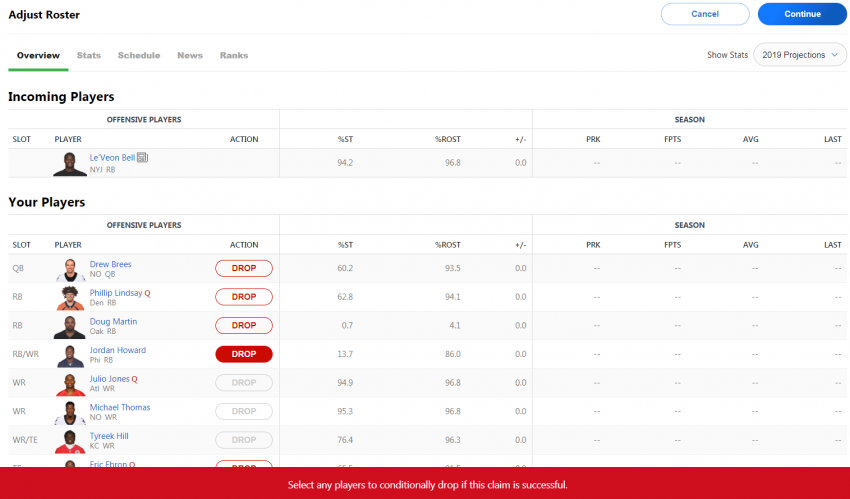
Understanding the NFL waiver process is essential for fans tracking roster moves, free agency, and late-season signings. When a player is waived by his team, there is a defined league-wide system that determines whether he joins a new team, stays unemployed, or signs a new contract elsewhere.
What Does It Mean When an NFL Player Is Waived?
When a team waives a player, it is releasing him with conditions. Instead of becoming a free agent immediately, the player is placed on the waiver wire, giving every other team a chance to claim him.
This process primarily applies to players with fewer than four accrued NFL seasons.
Step-by-Step: The NFL Waiver Process
1. Player Is Placed on Waivers
Once a waiver transaction is submitted to the National Football League, the player officially enters the waiver wire and cannot negotiate with teams during the claim window.
2. 24-Hour Waiver Claim Period
- All 31 remaining teams have 24 hours to submit a claim.
- Claims are confidential and processed by the league office.
- Teams evaluate roster needs, salary cap impact, and contract terms.
3. Waiver Priority Determines Which Team Wins
If multiple teams submit claims, waiver priority decides the winner:
- Weeks 1–3: Priority is based on the previous season’s standings (worst record first).
- Week 4 onward: Priority is based on current season standings.
- After a successful claim, the winning team moves to the back of the waiver order.
This system helps maintain competitive balance across the league.
4. Player Joins the Claiming Team
If claimed:
- The player automatically joins the new team
- The new team inherits the existing contract (salary, years, guarantees)
- The original team cannot block or match the claim
- The player must report immediately and be added to the active roster or injured list
5. If the Player Clears Waivers
If no team submits a claim:
- The player clears waivers
- He becomes an unrestricted free agent
- He may sign any contract, with any team, at any salary
At this point, teams often negotiate shorter deals or minimum contracts.
Special NFL Waiver Rules to Know
Veterans and Accrued Seasons
- Players with four or more accrued seasons are typically released, not waived
- Released veterans become free agents immediately
- They are free to negotiate without waiting for waivers to clear
Waived vs Released: Key Difference
- Waived: Player must pass through the waiver wire
- Released: Player immediately becomes a free agent
This distinction is critical during roster cutdowns and midseason moves.
Injured Players
When a player is waived while injured:
- Teams may use a waived/injured designation
- If unclaimed, the player may revert to injured reserve
- Injury settlements are often negotiated
A claiming team assumes responsibility for the injury status.
Practice Squad Eligibility
If a waived player clears waivers:
- He may sign to a practice squad (if eligible)
- Other teams can later sign him to their active roster
- This often happens late in the season due to injuries
Why NFL Teams Use Waivers Strategically
Teams waive players to:
- Create roster flexibility
- Manage salary cap space
- Fill short-term injury gaps
- Take calculated risks on depth players
Late-season waiver claims can play a significant role in playoff races.
Quick Summary: NFL Waiver Process
- Waived players enter a 24-hour claim window
- Teams claim based on waiver priority
- Claimed players keep their existing contracts
- Unclaimed players become free agents
- Veterans usually skip waivers
- Practice squads provide another path to joining a team
Final Thoughts
The NFL waiver system is designed to balance competitive fairness while giving players multiple opportunities to continue their careers. Whether claimed immediately or signed later as a free agent, being waived does not mean the end of a player’s NFL journey.