





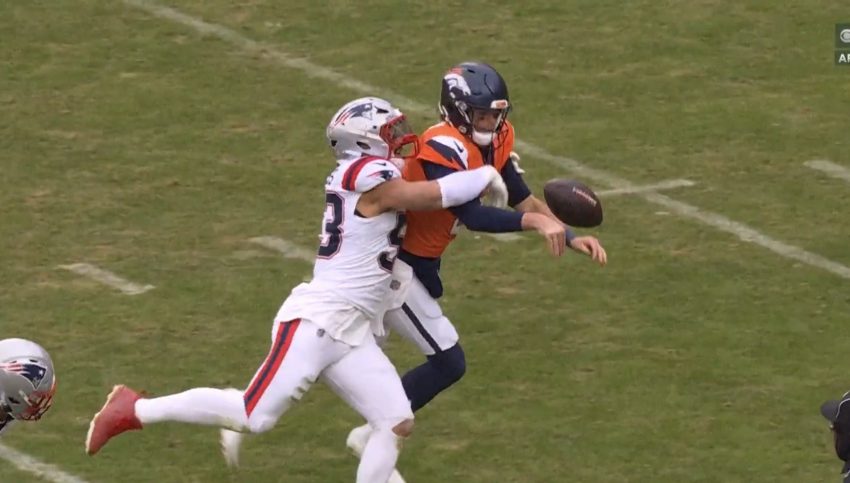
In the NFL, few rules generate more confusion—and controversy—than the distinction between a forward pass, a backward pass, and a fumble. Games, seasons, and even championships have turned on whether a dropped football is ruled an incomplete pass or a live ball.
This article breaks down exactly when a quarterback’s pass becomes a fumble, how officials determine the call, and why replay reviews often take several minutes.
What Determines a Pass vs. a Fumble in the NFL?
The NFL bases its ruling on two critical factors:
- Direction of the throw
- Whether the quarterback’s arm was moving forward
Both must be evaluated together to determine the correct call.
Forward Pass: When a Dropped Ball Is NOT a Fumble
A play is ruled a forward pass if:
- The quarterback’s arm is moving forward, and
- The ball travels forward (even slightly)
If the ball then hits the ground untouched:
- It is not a fumble
- The play is ruled an incomplete pass
- The ball is returned to the previous spot
- The down counts and clock rules apply
Key detail: Even if the quarterback loses control of the ball mid-motion, the pass is still incomplete as long as the arm is clearly moving forward.
Backward Pass or Lateral: Always a Live Ball
A backward pass or lateral is treated very differently under NFL rules.
If a quarterback throws the ball:
- Backward, or
- Parallel to the line of scrimmage
and it hits the ground, the result is:
- Automatic fumble
- The ball remains live
- Either team may recover and advance it
There is no such thing as an incomplete backward pass in the NFL.
When a Forward Attempt Becomes a Fumble
A quarterback’s action becomes a fumble if:
- He loses control of the ball before his arm starts moving forward, or
- Contact from a defender knocks the ball loose prior to forward motion
This is commonly seen on:
- Strip sacks
- Defenders hitting the quarterback’s arm mid-cock
- Botched pump fakes
If forward motion has not clearly begun, the ball is live.
Replay Review: Why These Calls Take So Long
NFL officials rely heavily on replay to determine:
- The exact frame when control was lost
- Whether the arm had started its forward motion
- The ball’s direction relative to the line of scrimmage
Because forward motion can be minimal—sometimes just inches—these rulings often generate debate among fans, coaches, and analysts.
Common Scenarios Explained
| Situation | NFL Ruling |
|---|---|
| Forward pass hits ground | Incomplete pass |
| Forward pass tipped, then hits ground | Incomplete pass |
| Backward pass hits ground | Fumble (live ball) |
| Quarterback hit before arm moves forward | Fumble |
| Dropped shotgun snap | Fumble |
| Lateral recovered by defense | Live ball, return allowed |
Why This Rule Matters So Much
The forward pass vs. fumble rule:
- Directly impacts turnovers
- Can lead to defensive touchdowns
- Frequently decides playoff games
- Is one of the most replay-reviewed calls in football
Understanding the distinction helps explain why two plays that look identical can have completely different outcomes.
Final Takeaway
In the NFL, arm motion and ball direction determine everything. If the quarterback’s arm is moving forward, the play is usually an incomplete pass. If it’s not—or if the throw goes backward—the ball is live, and anything can happen.
For fans, analysts, and bettors alike, it remains one of the most important rules to understand in professional football.