





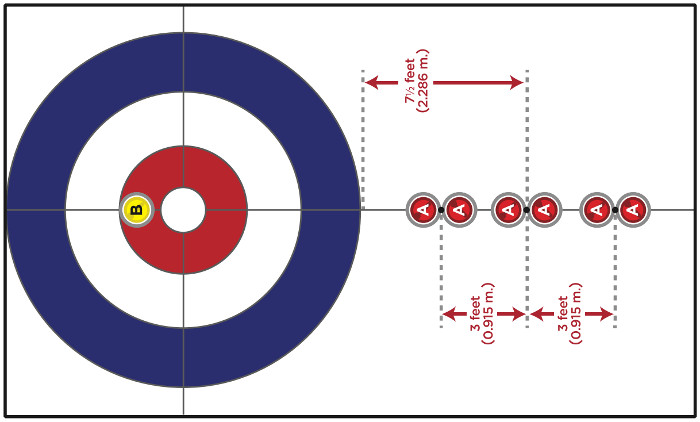
In curling, a power play is a special strategic option designed to help the team with the hammer score multiple points in a single end. Introduced to encourage more offensive play, the power play changes how stones are positioned at the start of an end, opening the ice and creating better scoring opportunities.
What Is a Power Play in Curling?
A power play allows the team with the last stone advantage (hammer) to request an altered stone setup at the beginning of an end. Instead of guards being placed in the center of the sheet, the stones are shifted to one side of the center line, creating open space and increasing the chance of a multi-point score.
When Can a Power Play Be Used?
- Only by the team with the hammer
- Can be used once per game
- Must be declared before the end begins
- Commonly used in later ends or when a team is trailing
How the Power Play Setup Works
Under normal rules, the first four stones (two from each team) are positioned as center guards. During a power play:
- The pre-set stones are moved left or right of center
- One half of the sheet becomes more open
- The hammer team gains clearer access to the button
This setup reduces defensive congestion and allows for aggressive draws and hits.
Why Teams Use the Power Play
Teams call a power play to:
- Increase the odds of scoring two or more points
- Avoid a blank end
- Create offense when behind on the scoreboard
- Force the opposing team into tougher defensive shots
Risks of Using a Power Play
While a power play creates scoring chances, it also comes with risk:
- Missed shots can expose the house
- The defending team may set up a steal
- Poor execution can flip momentum late in a match
Because of this, teams typically reserve the power play for high-leverage moments.
Power Play vs Blank End
A blank end keeps the hammer for the next end, while a power play aggressively seeks points immediately. Teams often choose between:
- Blank end → long-term strategy
- Power play → immediate scoring push
Is the Power Play Used in All Curling Leagues?
The power play is most commonly seen in:
- Mixed doubles curling
- Professional and televised leagues
- Select international competitions
It may not be used in all traditional club or amateur formats.
Final Thoughts
The power play has added a new layer of strategy to curling, rewarding precision, confidence, and aggressive shot-making. When used at the right moment, it can completely change the outcome of a match.