





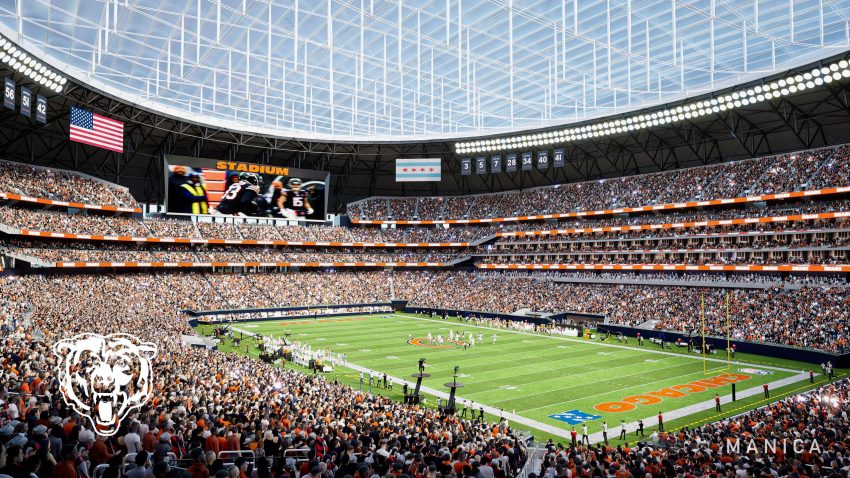
The question keeps coming up: Why can’t the Chicago Bears just rebuild Soldier Field?
With ongoing stadium debates and discussions about a potential move, many fans assume the solution is simple — tear down the old stadium and build a modern NFL venue in its place.
In reality, rebuilding Soldier Field is far more complicated. Legal protections, land restrictions, public funding challenges, and structural limitations make a full rebuild extremely difficult.
Here’s a complete breakdown of why it isn’t that simple.
Who Owns Soldier Field?
One of the biggest misconceptions is ownership.
The Chicago Bears do not own Soldier Field. The stadium is owned by the City of Chicago and managed by the Chicago Park District.
That means:
- The Bears cannot independently demolish or rebuild the stadium.
- Any major renovation requires city approval.
- Public financing would likely be required.
- Political negotiations would be unavoidable.
Unlike many modern NFL franchises that own or control their stadium sites, the Bears operate as tenants.
Lakefront Protection Laws Limit Expansion
Soldier Field sits on Chicago’s protected lakefront. The city’s lakefront is governed by public trust doctrine and strict land-use protections designed to preserve open public space.
This creates major constraints:
- Expanding the stadium footprint would face legal challenges.
- Environmental reviews would be required.
- Lawsuits from preservation groups are likely.
- Development on protected parkland is heavily restricted.
Even if the stadium were torn down, rebuilding something significantly larger could violate long-standing lakefront preservation policies.
Historic Preservation Concerns
Originally opened in 1924, Soldier Field carries historic significance.
Although the 2002 renovation removed its official National Historic Landmark designation, parts of the structure — especially the iconic colonnades — still carry preservation expectations.
A full demolition could trigger:
- Preservation lawsuits
- Public opposition
- Federal and state review processes
This adds another layer of complexity and delay to any potential rebuild.
The Financial Hurdle: Billions Required
Building a modern NFL stadium today typically costs $2–3 billion or more.
Rebuilding on the current lakefront site would likely require:
- Significant public funding
- State approval
- Taxpayer contributions
- Political backing in Illinois
Given Illinois’ budget pressures and taxpayer skepticism about stadium subsidies, public funding remains a major obstacle.
Politically, approving billions in stadium funding carries significant risk for elected officials.
Structural and Revenue Limitations
Even beyond legal and political barriers, Soldier Field’s footprint limits its long-term revenue potential.
Current challenges include:
- Smallest seating capacity in the NFL
- Limited parking
- No surrounding entertainment district
- No dome for year-round events
- Tight physical footprint between the lake and protected parkland
Modern NFL franchises seek:
- Year-round event hosting (Super Bowl, Final Four, concerts)
- Mixed-use developments with hotels, retail and restaurants
- Control over naming rights and real estate development
The downtown lakefront location restricts many of these revenue opportunities.
Why Arlington Heights Became an Option
The Bears purchased property in Arlington Heights, the former Arlington Park racetrack site.
That suburban site offers advantages:
- Full land control by the team
- Ability to build a dome
- Large surrounding development space
- More flexible financing structure
- Expanded parking and infrastructure
From a business perspective, a suburban stadium gives the Bears greater autonomy and long-term revenue potential compared to the heavily regulated lakefront site.
Can the Bears Renovate Instead of Rebuild?
Smaller renovations are possible. However, even significant upgrades would still face:
- Lakefront development limits
- Public funding debates
- Capacity and structural constraints
A complete modern transformation comparable to new NFL stadiums would likely require far more flexibility than the current site allows.
The Bottom Line
The Chicago Bears cannot easily rebuild Soldier Field because:
- They do not own the stadium.
- The lakefront land is legally protected.
- Historic preservation concerns complicate demolition.
- Public funding is politically sensitive.
- The site limits long-term revenue expansion.
While staying downtown remains appealing to many fans and city leaders, the legal and financial realities make a full rebuild extraordinarily complex.
For now, the future of the Bears’ stadium remains one of the most significant business and political stories in Chicago sports.