





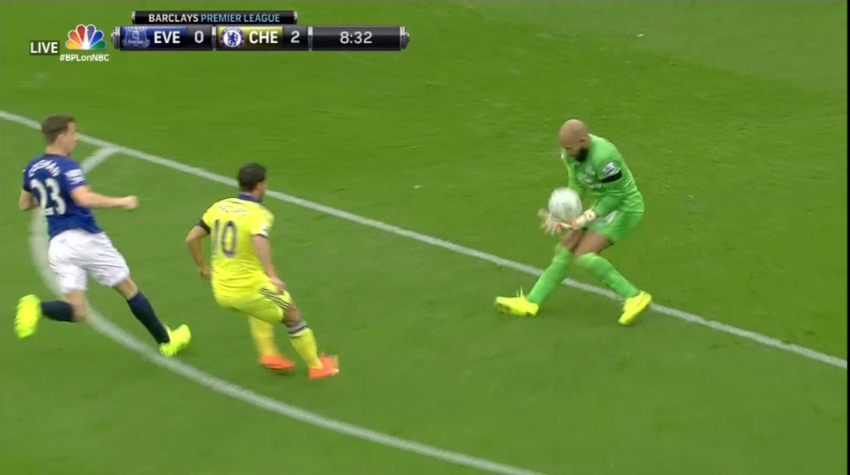
In football, goalkeepers enjoy a unique privilege: they can handle the ball—but only inside their own penalty area. Once they step outside that boundary, they are treated like any outfield player. This raises a common question among fans: can a goalkeeper get a yellow card for catching the ball outside the box? The answer is yes—and it happens more often than you might think.
Understanding the Rule
According to the Laws of the Game, a goalkeeper who deliberately handles the ball outside the penalty area commits a handball offense. From that moment, they are no different from any other player and are subject to the same disciplinary rules.
The referee will award:
- A direct free kick to the opposing team
- A card (yellow or red) depending on the severity of the offense
When It Results in a Yellow Card
A goalkeeper will typically receive a yellow card if the handball:
- Is deliberate but not denying an obvious goal-scoring opportunity
- Stops a promising attack, rather than a clear one-on-one chance
- Occurs due to a misjudgment, such as rushing off the line too far
This scenario is quite common. For example, a goalkeeper may sprint off their line to intercept a through ball, miscalculate the distance, and instinctively grab the ball just outside the area to prevent an attacker from advancing.
When It Becomes a Red Card
The punishment becomes more severe—a red card—if the handball:
- Denies an obvious goal-scoring opportunity (DOGSO)
- Prevents a clear chance where the attacker would likely score
In these cases, the goalkeeper is sent off, and their team must continue with 10 players.
A well-known example of deliberate handball denial is Luis Suárez during the 2010 FIFA World Cup (though he was not a goalkeeper). The same principle applies to keepers outside their box.
Real Match Situations
Across top leagues and competitions, there have been numerous instances where goalkeepers:
- Handled the ball just outside the box under pressure
- Received a yellow card for stopping a developing attack
- Or, in more serious cases, were shown a red card for denying a clear goal
One such example includes Hugo Lloris, who was sent off after handling outside the area in a dangerous situation.
Key Takeaways
- Goalkeepers can receive a yellow card for handling the ball outside the penalty area
- The decision depends on intent and impact on play
- More serious offenses—especially denying a clear goal—lead to a red card instead
Final Thoughts
While goalkeepers are trained to control their positioning, high-pressure situations can lead to split-second mistakes. When they cross the line—literally—the rules are clear: outside the box, they are just another outfield player. Understanding these distinctions helps fans better interpret referee decisions and the flow of the game.