





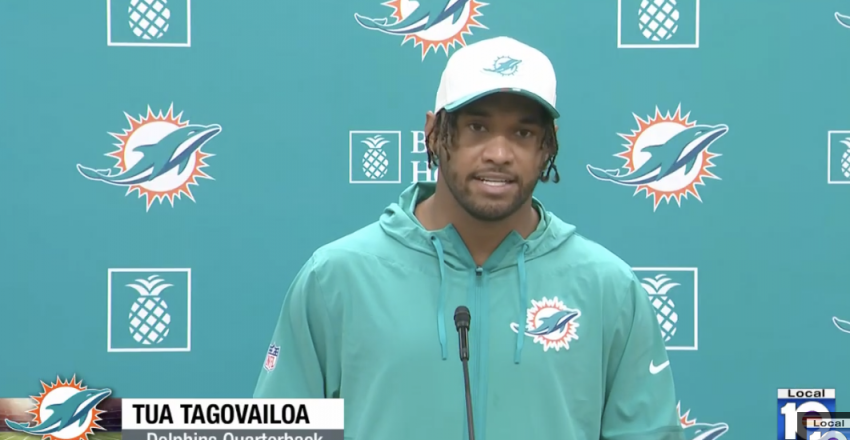
The Miami Dolphins can change coaches, adjust schemes, and reshuffle parts of the roster — but none of those decisions carry more weight than the contract of quarterback Tua Tagovailoa. As the calendar moves closer to March 2026, Miami’s margin for error continues to shrink.
Where Tua’s Contract Stands Right Now
Tagovailoa’s deal already places the Dolphins in a position of limited flexibility. He is fully guaranteed $54 million for the 2026 season, locking Miami into at least one more year of significant cap commitment regardless of performance, health, or coaching direction.
That reality makes the upcoming offseason less about evaluating whether Tua is the long-term answer and more about managing the consequences of an already-made financial decision.
March 2026: The Next Pressure Point
The most important date on the Dolphins’ internal calendar is March 15, 2026. On that day, $3 million of Tagovailoa’s 2027 salary becomes guaranteed. While the figure itself is modest compared to the total value of the deal, the timing matters far more than the amount.
Once that guarantee triggers, Miami’s ability to pivot away from Tagovailoa becomes even more constrained. In effect, March 2026 functions as a soft deadline forcing the organization to either double down on its quarterback or accept that it is extending financial exposure further into the future.
Why Miami Has No Immediate Exit
Even if the Dolphins wanted to reset the position before March 2026, the numbers make that nearly impossible. Cutting Tagovailoa outright would result in roughly $99 million in dead cap, a hit that would severely damage roster construction for multiple seasons.
That dead-money figure effectively removes “moving on” from the list of realistic short-term options. As a result, Miami’s decisions over the next year are not about replacing Tua — they are about maximizing the investment they have already made.
Coaching Change, Contract Commitment
The departure of Mike McDaniel signals organizational urgency, but Tagovailoa’s contract ensures continuity at quarterback whether the Dolphins like it or not. Any new head coach will be hired with the understanding that Tua is not a stopgap — he is the centerpiece of the offense through at least the 2026 season.
That makes scheme fit, quarterback protection, and offensive adaptability more important than ever. Miami does not have the luxury of experimenting at the position while carrying such a heavy guaranteed commitment.
How the Contract Shapes Miami’s 2026 Strategy
Leading up to March 2026, Tagovailoa’s deal impacts nearly every strategic decision:
- Roster building: The Dolphins must prioritize offensive line stability and health management.
- Draft planning: Quarterback insurance may come later in the draft, but not as a primary investment.
- Cap management: Every dollar saved elsewhere helps offset the fixed quarterback cost.
Miami is essentially locked into a one-direction approach: win with Tua now, or pay heavily for failing to do so later.
Final Outlook
Tua Tagovailoa’s contract situation has turned the months leading up to March 2026 into a quiet countdown for the Miami Dolphins. The guarantees already in place eliminate flexibility, while the next trigger date adds urgency to every football decision the organization makes.
Whether Miami ultimately views Tagovailoa as its long-term franchise quarterback or not, the contract ensures that the Dolphins’ competitive window — and their financial risk — are fully intertwined over the next two seasons.