




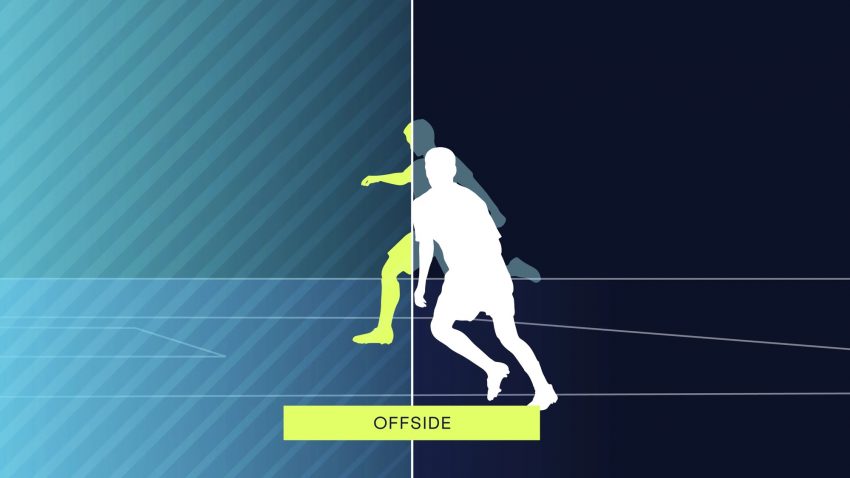
Yes, a player can be offside on a free kick, but it depends on where the free kick is taken and how the play develops. The offside law applies to both direct and indirect free kicks in most situations, although there are important exceptions that every soccer fan should understand.
Whether you’re new to the game or looking to better understand the rules, here’s everything you need to know about being offside on a free kick.
Does the Offside Rule Apply on Free Kicks?
In most cases, yes. A player can be penalized for offside if they:
- Are in an offside position when the free kick is taken.
- Become involved in active play by receiving the ball, interfering with an opponent, or gaining an advantage.
The offside rule works the same way on a free kick as it does during open play.
What Is an Offside Position?
A player is in an offside position if, at the moment a teammate kicks the ball:
- They are in the opponent’s half of the field.
- Any part of their head, body, or feet that can legally score a goal is nearer to the opponent’s goal line than both the ball and the second-last defender.
Simply standing in an offside position is not an offense. The player must also become actively involved in the play.
Example of an Offside Free Kick
Imagine a team is awarded a free kick about 35 yards from goal.
One attacker stands behind the defensive line before the kick is taken. If the free kick is played directly to that attacker and they touch the ball before another teammate or defender changes the play, the assistant referee will raise the flag for offside.
When Can You Not Be Offside?
There are three important exceptions where a player cannot be called offside, even if they receive the ball in what would normally be an offside position:
- Goal kicks
- Corner kicks
- Throw-ins
These are the only restarts specifically exempt from the offside law.
What About Defensive Free Kicks?
If the defending team takes a free kick inside its own penalty area, attackers must remain outside the required distance until the ball is in play. However, once the ball is legally in play, the normal offside law applies for the remainder of the possession.
Direct vs. Indirect Free Kicks
The offside rule applies equally to both:
Direct Free Kick
- The kicker may shoot directly at goal.
- Attackers must still avoid being offside when the ball is played.
Indirect Free Kick
- Another player must touch the ball before a goal can be scored.
- Offside is still judged at the moment the initial kick is taken.
The type of free kick does not change how the offside law is enforced.
Why Teams Use the Offside Trap on Free Kicks
Defending teams frequently push their defensive line forward just before an attacking free kick is taken. This tactic, known as the offside trap, is designed to leave attackers in an offside position as soon as the ball is kicked.
Well-organized defenses often use this strategy on long free kicks and set pieces to force an offside call before an attacking player can create a scoring chance.
Common Misconceptions
“You can’t be offside on any set piece.”
False. While players cannot be offside on goal kicks, corner kicks, or throw-ins, they absolutely can be offside on free kicks.
“Standing behind the defense is automatically a foul.”
Not necessarily. A player is only penalized if they become involved in active play after the ball is kicked by a teammate.
“Indirect free kicks don’t have offside.”
Incorrect. The offside rule applies to both direct and indirect free kicks.
Frequently Asked Questions
Can you score directly from a free kick if a teammate is offside?
No. If that teammate is in an offside position and becomes involved in the play before the goal is scored, the goal will be disallowed and the defending team will receive an indirect free kick.
Can you be offside from your own half?
No. A player cannot be offside if they are entirely in their own half of the field when the ball is played.
Can VAR review offside on a free kick?
Yes. In competitions that use Video Assistant Referee (VAR), officials can review offside decisions that lead directly to goals or other reviewable incidents.
Final Thoughts
So, can you be offside on a free kick? The answer is yes. The offside law applies to both direct and indirect free kicks just as it does during normal play. The only restarts where offside does not apply are goal kicks, corner kicks, and throw-ins.
Understanding when the offside rule applies on free kicks makes it easier to follow the game and appreciate the tactics teams use on attacking and defensive set pieces. Whether it’s a perfectly timed run or a well-executed offside trap, free kicks remain one of soccer’s most strategic moments.