




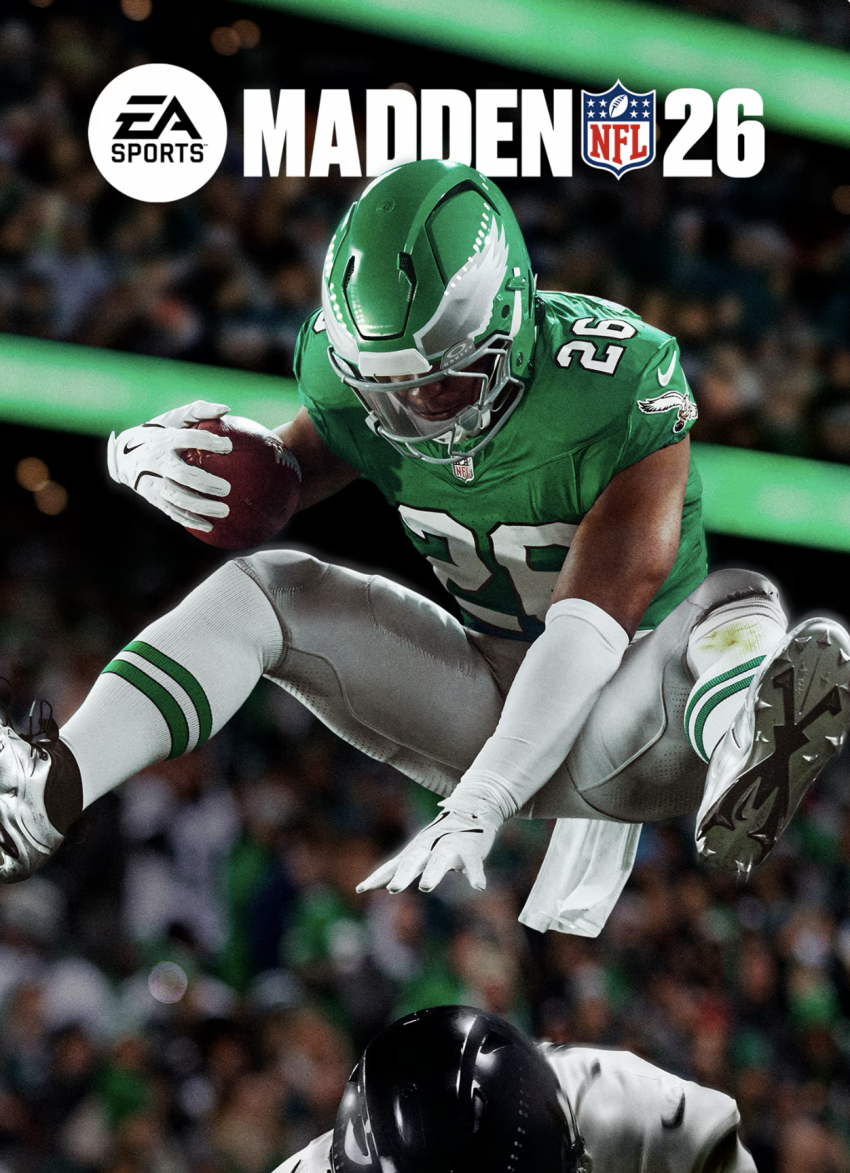
Every summer, one of the biggest talking points leading up to the release of a new Madden NFL game is the player ratings. Fans debate whether quarterbacks are overrated, wide receivers deserve higher speed ratings, or defensive stars have been overlooked. But how does EA Sports actually determine Madden player ratings?
While EA Sports does not publicly reveal its exact formulas, the company has shared that its ratings process combines statistical analysis, game film, athletic testing, and expert evaluation. The result is a comprehensive system designed to reflect how NFL players perform on the field rather than relying solely on box score statistics.
Here’s a closer look at how Madden player ratings are created.
Performance on the Field Comes First
The ratings process begins with evaluating a player’s recent NFL performance. The Madden ratings team reviews how each player performed during the previous season, placing significant emphasis on consistency and production.
Factors considered include:
- Passing, rushing, and receiving statistics
- Tackles, sacks, and interceptions
- Turnovers and ball security
- Touchdowns and explosive plays
- Advanced football analytics
- Performance against quality opponents
While career accomplishments are considered, recent production generally carries the most weight when determining yearly ratings.
Film Study Plays a Major Role
Statistics only tell part of the story. EA Sports also studies extensive game film to evaluate traits that traditional statistics cannot fully capture.
Film review helps assess:
- Route running precision
- Pocket awareness
- Decision-making
- Blocking technique
- Coverage skills
- Pass-rush moves
- Vision and football instincts
- Footwork and mechanics
For example, two cornerbacks may finish the season with the same number of interceptions, but one may consistently shut down elite receivers while the other benefits from tipped passes or favorable matchups. Film helps identify those differences.
Athletic Traits Influence Physical Ratings
Athletic ability is another key component of Madden ratings.
EA Sports evaluates measurable physical traits using data from sources such as:
- NFL Combine testing
- Pro Day workouts
- Verified speed measurements
- GPS tracking data
- On-field athletic performance
These metrics help determine ratings for physical attributes, including:
- Speed (SPD)
- Acceleration (ACC)
- Agility (AGI)
- Strength (STR)
- Jumping (JMP)
Players known for elite athleticism often receive high ratings in these categories even if their overall rating remains lower due to limited experience or production.
Individual Attributes Are Rated First
Rather than assigning an Overall (OVR) rating immediately, EA Sports grades dozens of individual attributes for every player.
Quarterback Attributes
Quarterbacks are evaluated in areas such as:
- Throw Power
- Short Accuracy
- Medium Accuracy
- Deep Accuracy
- Throw Under Pressure
- Awareness
- Play Action
- Speed and Mobility
Wide Receiver Attributes
Receivers receive ratings for:
- Catching
- Catch in Traffic
- Spectacular Catch
- Release
- Short Route Running
- Medium Route Running
- Deep Route Running
- Speed
- Agility
Defensive Player Attributes
Defenders are evaluated differently depending on position.
Common ratings include:
- Tackling
- Pursuit
- Block Shedding
- Man Coverage
- Zone Coverage
- Hit Power
- Power Moves
- Finesse Moves
Each position emphasizes a unique combination of skills that contribute to gameplay.
Overall Ratings Use Position-Specific Formulas
Once all individual attributes are assigned, Madden calculates the player’s Overall (OVR) rating using a proprietary formula.
Importantly, the formula varies by position.
For example:
- Quarterbacks place greater emphasis on accuracy, awareness, and throw power.
- Running backs rely heavily on carrying, speed, agility, and break tackle ability.
- Wide receivers emphasize route running, catching, release, and speed.
- Edge rushers prioritize pass-rush moves, acceleration, and block shedding.
- Offensive linemen depend primarily on pass blocking, run blocking, awareness, and strength.
Because each position uses different weighting, two players with nearly identical attribute ratings may receive different overall ratings.
Archetypes Also Matter
Each Madden player belongs to an archetype that reflects their playing style.
Examples include:
- Field General Quarterback
- Improviser Quarterback
- Deep Threat Wide Receiver
- Slot Receiver
- Power Running Back
- Speed Rusher
- Zone Cornerback
These archetypes influence player progression, abilities, and gameplay in Franchise Mode and Ultimate Team.
Ratings Change Throughout the NFL Season
Madden ratings are not permanent.
EA Sports regularly releases roster updates that adjust player ratings based on current NFL performance.
Reasons for rating changes include:
- Breakout performances
- Sustained improvement
- Poor play
- Injuries
- Trades
- Position changes
Players can see their overall ratings rise or fall multiple times during a season depending on their real-life production.
Who Creates Madden Ratings?
EA Sports employs a dedicated ratings team responsible for evaluating every NFL player in the game.
The team works alongside:
- Football analysts
- Former NFL players
- Scouts
- Coaches
- Statistical researchers
Community feedback is also considered, although the final decisions remain with EA Sports.
Why Madden Ratings Are Often Debated
No rating system can eliminate subjectivity entirely.
While Madden relies on extensive data and scouting, evaluating football players involves balancing measurable performance with traits that are difficult to quantify, such as football IQ, instincts, leadership, and consistency.
As a result, annual debates surrounding player ratings have become part of the excitement leading up to each Madden release.
Final Thoughts
Madden player ratings are built through a combination of statistical analysis, film study, athletic testing, and position-specific evaluation rather than a single mathematical formula.
Every player’s individual attributes are graded first, then combined using proprietary weighting based on position to produce an Overall rating. EA Sports also updates ratings throughout the NFL season to reflect changes in player performance, ensuring the game remains as realistic as possible.
Whether fans agree with every rating or not, the annual rankings remain one of the most anticipated aspects of every new Madden NFL release.