




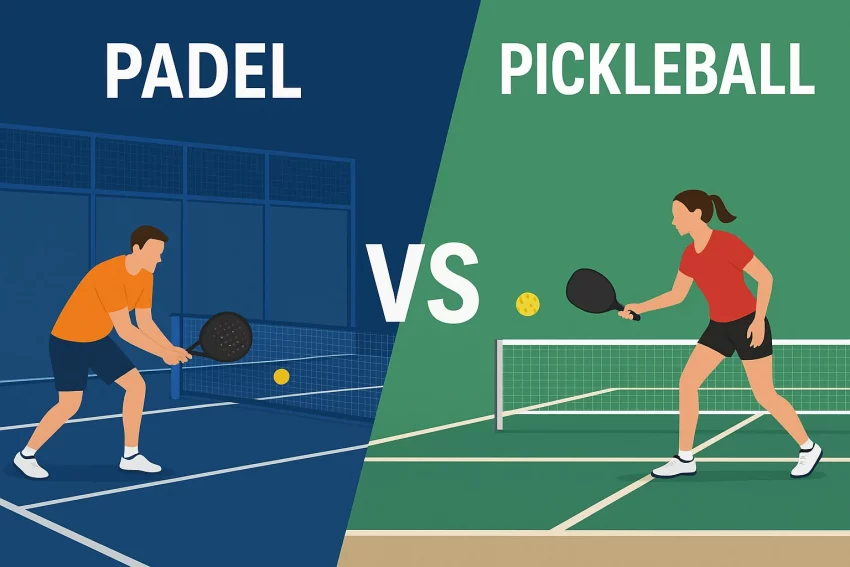
Padel and pickleball are two of the fastest-growing racket sports in the world, attracting players of all ages and skill levels. While both games share similarities with tennis, they feature different courts, equipment, rules, and styles of play. If you’re wondering how padel differs from pickleball, here’s everything you need to know.
What Is Padel?
Padel is a doubles racket sport that combines elements of tennis and squash. It is played on an enclosed court surrounded by glass walls and metal fencing, allowing the ball to remain in play after bouncing off the walls.
Originally created in Mexico, padel has become one of the most popular sports in countries such as Spain, Argentina, Italy, and Sweden. In recent years, the sport has rapidly expanded across the United States.
What Is Pickleball?
Pickleball is a paddle sport that blends aspects of tennis, badminton, and table tennis. It is played on an open court with a lightweight plastic ball featuring holes and can be enjoyed in singles or doubles competition.
The sport has experienced explosive growth in North America thanks to its accessibility, simple rules, and social atmosphere.
Padel vs. Pickleball: Key Differences
Court Size
One of the biggest differences between the two sports is the playing surface.
Padel is played on a 66-foot by 33-foot enclosed court with glass walls that are part of the game. Players can use these walls strategically to extend rallies.
Pickleball is played on a much smaller 44-foot by 20-foot open court without walls, making out-of-bounds shots end the point immediately.
Equipment
Each sport uses specialized equipment.
Padel Equipment
- Solid racket without strings
- Perforated hitting surface
- Low-pressure tennis ball
Pickleball Equipment
- Lightweight solid paddle
- Plastic perforated pickleball
- Smaller paddle compared to a padel racket
Although both sports use solid paddles or rackets, the balls behave very differently due to their construction.
Rules and Gameplay
Padel
- Usually played as doubles.
- Underhand serve after one bounce.
- Glass walls remain in play.
- Longer rallies with strategic angles.
- Players frequently use lobs and overhead smashes.
Pickleball
- Played as singles or doubles.
- Underhand serve into the diagonal service court.
- Features the “kitchen,” also known as the non-volley zone.
- Quick exchanges near the net.
- Soft dinks and rapid reflexes are essential.
Which Sport Is Faster?
The answer depends on what aspect of speed you’re measuring.
Padel features faster ball speeds and larger movement around the court because players use the walls to continue points.
Pickleball emphasizes quick reactions at the net, where hand speed and precision become the deciding factors during fast-paced rallies.
Which Sport Is Easier to Learn?
Many beginners find pickleball easier to learn because:
- The court is smaller.
- Rules are relatively simple.
- No wall strategy is required.
- Equipment is inexpensive.
Padel has a steeper learning curve since players must understand how to use the walls effectively, similar to squash.
Fitness Benefits
Both sports provide excellent cardiovascular exercise while improving:
- Agility
- Coordination
- Balance
- Reflexes
- Endurance
Padel generally involves more running due to the larger court, while pickleball focuses on short bursts of movement and quick reaction time.
Which Sport Is Growing Faster?
Both sports are experiencing significant global growth.
Padel has become one of the world’s fastest-growing sports, particularly throughout Europe and Latin America, with thousands of new courts opening annually.
Meanwhile, pickleball continues to dominate recreational growth in the United States, where millions of Americans now play regularly at parks, recreation centers, and dedicated pickleball facilities.
Should You Play Padel or Pickleball?
Choose padel if you:
- Enjoy tennis or squash.
- Prefer doubles competition.
- Like strategic rallies using walls.
- Want a dynamic, high-energy workout.
Choose pickleball if you:
- Want a beginner-friendly sport.
- Enjoy fast-paced net play.
- Prefer singles or doubles.
- Have easy access to local community courts.
Ultimately, both sports offer excellent exercise, social interaction, and competitive opportunities.
Frequently Asked Questions
Is padel harder than pickleball?
Generally, yes. Padel requires players to master wall play, positioning, and more advanced shot selection, making it slightly more challenging for beginners.
Can tennis players easily switch to padel?
Yes. Tennis players often adapt quickly to padel because of the similar scoring system and ball, although learning to use the walls effectively takes practice.
Which sport burns more calories?
Padel typically burns more calories because players cover more ground during rallies. However, calorie expenditure depends on the intensity of play.
Is pickleball or padel more popular?
Pickleball is currently more popular in the United States, while padel has a much larger international following, especially in Spain, Argentina, and much of Europe.
Final Thoughts
Padel and pickleball each offer unique experiences for players looking to stay active and have fun. Padel delivers a fast-paced game with strategic wall play and longer rallies, while pickleball provides accessible, social competition with quick net exchanges and simple rules. Whether you’re a seasoned racket sport enthusiast or trying something new, both games offer exciting ways to improve fitness, develop new skills, and enjoy time on the court.