




Lateral passes are among the most exciting and unpredictable plays in the NFL. Whether a team is attempting a last-second comeback or extending a play after a reception, laterals can dramatically change the outcome of a football game. But what are the NFL rules regarding lateral plays, and when is a lateral considered illegal?
What Is a Lateral Pass in the NFL?
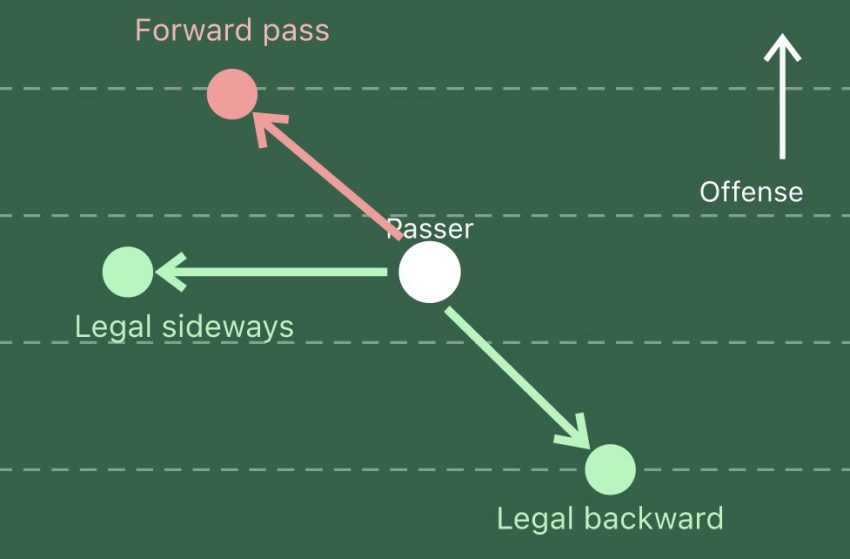
A lateral pass, officially known as a backward pass, occurs when a player throws or pitches the football sideways or backward. Unlike a forward pass, a lateral can be attempted anywhere on the field, including beyond the line of scrimmage.
What Are the NFL Rules for Lateral Plays?
Teams can attempt unlimited legal laterals during a single play. Any player can receive a backward pass, including offensive linemen. A dropped lateral that remains inbounds is a live football. Defensive players can execute laterals following an interception or fumble recovery. Players can continue making legal laterals after the game clock expires until the play is ruled dead.
What Makes a Lateral Illegal in the NFL?
A pass is forward if it initially travels toward the opponent’s goal line or first strikes the ground, a player, an official or anything else at a point nearer that goal line than where it was released. An illegal forward pass occurs when a player throws forward beyond the line of scrimmage or attempts a second forward pass during the same down. An illegal forward pass beyond the line of scrimmage generally results in a five-yard penalty and loss of down.
What Happens if a Lateral Pass Hits the Ground?
Unlike an incomplete legal forward pass, a backward pass that hits the ground inbounds remains live. Either team can recover and advance the football. This makes lateral plays particularly risky.
NFL Lateral Pass vs. Forward Pass
A team may throw one legal forward pass per down from behind the line of scrimmage, subject to the other forward-pass restrictions. Backward passes are unlimited, can occur beyond the line of scrimmage and can be received by offensive linemen or made after an interception.
Are Laterals Allowed in the Final Two Minutes?
Yes. Unlike ordinary fumbles, legal backward passes can generally be recovered and advanced by teammates after the two-minute warning or on fourth down. Intentionally throwing a backward pass out of bounds to conserve time can result in a penalty and a potential 10-second runoff.
Can NFL Players Lateral After Time Expires?
Yes. If the play begins legally before the clock reaches zero, players can continue making backward passes until the play ends. Teams frequently use this strategy when they need a touchdown on the final play of regulation.
Famous Lateral Plays in NFL History
The Music City Miracle (2000) saw the Tennessee Titans defeat the Buffalo Bills following a controversial but legal lateral on a kickoff return. In the Miami Miracle (2018), the Dolphins executed multiple laterals to defeat the New England Patriots. In 2022, a failed Patriots lateral was caught by Raiders defender Chandler Jones, who returned it for a game-winning touchdown.
How Many Laterals Are Allowed in an NFL Play?
There is no limit to the number of legal backward passes an NFL team can attempt during a single play. As long as the football remains live and each lateral is legal, players can continue exchanging possession.
Final Thoughts
NFL lateral pass rules give teams the opportunity to extend plays, create unexpected scoring opportunities and attempt dramatic last-second comebacks. While laterals can produce memorable moments, they carry significant risks because a dropped backward pass remains live. Backward passes are governed by Rule 8, Section 7 of the NFL rulebook.