




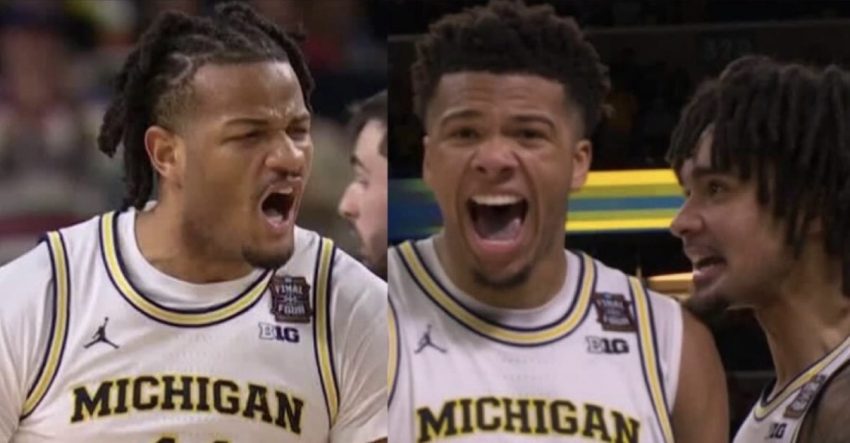
Michigan’s national championship victory in men’s college basketball offers a clear blueprint for success in the modern era of the sport. While financial resources continue to shape the landscape, the Wolverines proved that coaching, roster construction, and player development remain just as critical.
Standing on the court at Lucas Oil Stadium after the title win, Big Ten commissioner Tony Petitti summed up the reality of today’s game: resources matter. However, he also emphasized that winning still requires strong leadership, team chemistry, and high-level performance—principles that Michigan executed to perfection.
Michigan’s Transfer Portal Strategy Fueled Championship Run
One of the biggest factors behind Michigan’s success was its aggressive use of the transfer portal. In a system that now allows unrestricted player movement, the Wolverines built an entire starting lineup from transfers—something that would have been impossible just a few years ago.
Head coach Dusty May embraced this new model, assembling a roster that blended experience, versatility, and immediate impact talent. Key contributors included:
- Elliot Cadeau (UNC), who delivered a standout performance in the championship game and earned Most Outstanding Player honors
- Yaxel Lendeborg (UAB), who played through injury to contribute crucial points
- Morez Johnson Jr. (Illinois), who anchored the team with a double-double performance
- Aday Mara (UCLA), adding size and defensive presence
Rather than resisting the evolving system, Michigan leaned into it. May even compared the approach to professional sports, where roster building through trades and free agency is the norm.
Smart Spending: Michigan Didn’t Outspend the Competition
Despite being one of the most well-funded athletic departments in the country, Michigan did not rely solely on financial dominance. The program invested დაახლოებით $10 million into its roster, a strong figure but not among the highest in college basketball.
For context, programs like UConn reportedly spent significantly more on their basketball operations. Michigan’s total athletic budget sits around $266 million, yet its basketball operating budget ranked just 26th nationally at $14.4 million.
This measured spending approach highlights an important lesson: success isn’t about spending the most, but spending effectively.
Coaching and Culture Still Define Championship Teams
At the center of Michigan’s title run was Dusty May’s leadership. While not among the highest-paid coaches in the sport, May built a system focused on player development, cohesion, and execution.
Michigan’s ability to quickly integrate transfer players into a cohesive unit was one of its greatest strengths. The team played unselfish, disciplined basketball—proving that culture and coaching still outweigh pure talent accumulation.
As Petitti noted, there is no single formula for winning. Michigan’s success came from aligning resources with strong leadership and a clear vision.
The Future of College Basketball: A New Blueprint
Michigan’s championship run reflects the new reality of college basketball:
- The transfer portal is now central to roster building
- Financial investment is necessary, but not decisive on its own
- Coaching, development, and chemistry remain essential
Rather than complaining about the system, Michigan embraced it and thrived. Their approach offers a model for other programs navigating the evolving landscape of college athletics.
In the end, Michigan didn’t just win a championship—they demonstrated how to win in the modern era.